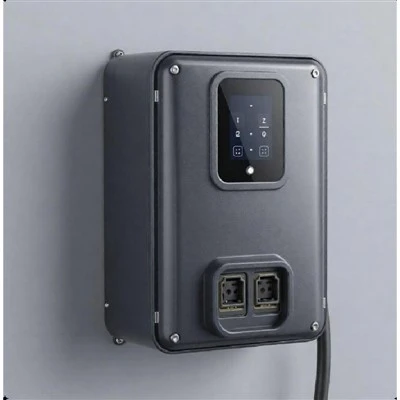
The market status of charging solutions is mainly reflected in market size, technological progress, market competition pattern and policy support.
Market size
In 2024, the market size of China's smart terminal charging and storage products industry will be 57.352 billion yuan, a year-on-year increase of 6.62%, showing strong demand for efficient charging and storage solutions in consumer electronics, new energy vehicles and other fields. The global electric vehicle home charging solution market is also growing rapidly. From 2018 to 2022, the total revenue of global electric vehicle home charging solutions increased from 1.615 billion yuan to 8.541 billion yuan, with a compound annual growth rate of 51.6%.
Technological progress
With the continuous advancement of technology, emerging technologies such as fast charging technology and wireless charging technology have gradually been applied and promoted. For example, 100-watt fast charging has become the standard for flagship mobile phones, and magnetic resonance technology has broken through the power bottleneck in the field of wireless charging, increasing the penetration rate in vehicle and home scenarios. In addition, scenario-based solutions such as smart home energy storage systems and new energy vehicle charging and storage stations are also accelerating their implementation.
Market competition pattern
There are about 4,000 home electric vehicle charging pile manufacturers in the world, most of which are small and medium-sized manufacturers. The top five electric vehicle home charging solution providers in the world account for about 45.9% of the market share, among which Shanghai Zhida Technology Development Co., Ltd. ranks first with a market share of about 12.2%. In the Chinese market, the government's vigorous promotion of new energy vehicles and consumers' attention to environmentally friendly travel have driven the growth of demand for home charging solutions.
Policy support
The government provides policy support for the promotion of new energy vehicles and the construction of charging infrastructure. For example, the EU's "pre-accession" green fund support for Serbia provides a good policy and funding environment for local companies and foreign brands. In addition, the Chinese government has also made the construction of charging infrastructure a national strategic priority and promoted the construction of new energy vehicles.